Your Nose Job Recovery at a Glance
Before diving into week-by-week details, it helps to understand the big picture. A nose job is one of the more nuanced procedures in cosmetic surgery, largely because the nose is composed of delicate cartilage, bone, and skin that all heal at different rates. What you see in the mirror at week two is not your final nose. What you see at month three is still not your final nose. Patience is genuinely the most important tool in your recovery kit.
Recovery unfolds in distinct phases: acute healing in the first two weeks, gradual resolution of deeper swelling from weeks three through twelve, and subtle tissue refinement that continues well into the first year. Knowing which phase you’re in helps you interpret what you’re seeing and feeling – and helps you resist the urge to judge results too early.
Recovering from Facial Plastic Surgery: The First 48 Hours
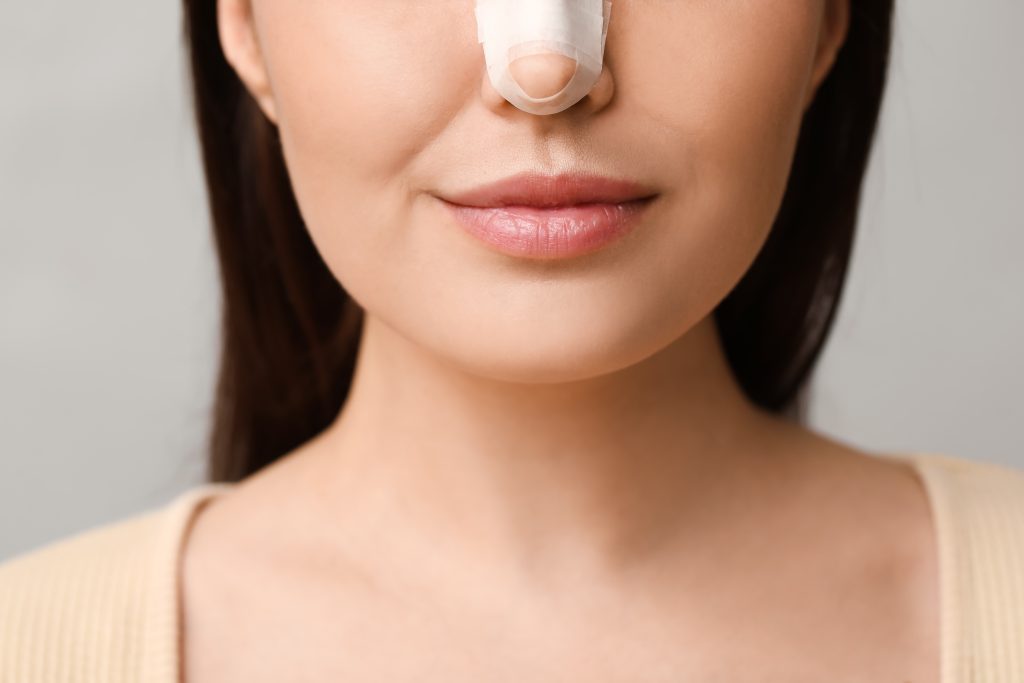
The initial hours after facial plastic surgery are focused entirely on rest and monitoring. You’ll wake up from anesthesia with a splint or cast across your nose, and possibly internal splints depending on what was done. Expect:
Grogginess and mild nausea from anesthesia
Noticeable swelling around the nose, cheeks, and eyes
Some bruising under the eyes (often described as raccoon eyes)
Nasal congestion due to internal swelling and packing, if used
A dull ache rather than sharp pain, typically manageable with prescribed medication
Most patients go home the same day. Having a trusted person with you for the first 24 hours is essential.
Surviving the First Week
The first week is the most visually dramatic period of recovery, and often the most emotionally challenging. Swelling peaks around day two or three, then gradually decreases. Bruising tends to look its worst before fading to yellow and then disappearing.
You’ll be advised to sleep on your back and limit all physical activity. Bending over, lifting anything heavier than a few pounds, or straining can increase blood pressure in your face and worsen swelling. Most surgeons remove the external splint at the end of this week, which is an exciting milestone. However, many patients are surprised that their nose still looks quite swollen and broad at this point. That’s completely normal.
Why You Should Keep Your Head Elevated
One of the most consistently given pieces of post-operative advice is to keep your head elevated, even during sleep. Keeping your head above the level of your heart reduces blood pooling in your face’s tissues, directly minimizing swelling and discomfort. Using two to three pillows or a wedge pillow works well. Sleeping in a recliner for the first week is another popular option. This guidance is especially important during the first ten days but remains beneficial well into the second and third weeks.
How to Use Cold Compresses Correctly
Cold compresses are a simple but effective tool during the early days of recovery. Applying them to your cheeks and the area around your eyes – never directly on your nose – can reduce swelling and provide comfort. A few guidelines to follow:
Use a soft cloth or purpose-made cold pack, never ice directly on skin
Apply for 15 to 20 minutes at a time with breaks in between
Avoid any pressure on the nasal bridge or splint
Stop using cold compresses after the first 48 to 72 hours unless directed otherwise
After this early window, cold packs offer diminishing returns and can sometimes cause irritation if overused.
Understanding the Healing Process: Weeks 2-6
By the start of the second week, most patients feel well enough to resume light activities, work from home, and be seen in public, especially once the splint comes off and bruising fades. The healing process during this phase is largely invisible. Beneath the skin, tissues are remodeling, inflammation is settling, and the surgical changes are becoming more defined.
Around weeks 3-4, many patients notice that their nose looks slightly better, then slightly worse, then better again. This fluctuation is normal and reflects the irregular nature of tissue healing. Swelling can be affected by sodium intake, sleep quality, allergies, and even stress levels. Staying hydrated, avoiding salty foods, and continuing to sleep on your back make a measurable difference.
By weeks five and six, most patients are cleared for light cardio. However, contact sports, heavy lifting, and anything that poses a risk of impact to the nose should be avoided for at least six weeks, often longer.
Continued Refinement: Months 3-12
The phase of continued refinement is the longest and, for many patients, the most underappreciated part of recovery. At the three-month mark, roughly 70-80% of swelling has typically resolved. The nose looks close to its eventual shape, but the tip often remains slightly swollen and undefined for several more months.
Between months 6-12, changes become subtle. The tip sharpens, skin adheres more closely to the underlying structure, and any minor asymmetries often self-correct as tissues settle. It’s worth taking photos monthly during this period, because day-to-day changes are nearly imperceptible while month-to-month progress is clearly visible.
When to Call Your Facial Plastic Surgeon
Most of recovery is uneventful, but there are specific signs that warrant a prompt call to your facial plastic surgeon:
Sudden increase in swelling or pain after initial improvement
Fever above 101°F (38.3°C)
Bright red bleeding that doesn’t stop with gentle pressure
Difficulty breathing that worsens rather than improves
Visible separation of incision lines
Routine follow-up appointments are built into most surgical practices, but don’t wait for a scheduled visit if something feels wrong. Your surgeon would always rather hear from you early.
Waiting for Your Final Results
The final results of rhinoplasty are typically assessed at the 12-month mark, though some surgeons prefer to wait 18 months in patients with thicker skin. By this point, essentially all swelling has resolved, scar tissue has matured, and the nose’s shape is stable. Before-and-after comparisons taken at this stage are the most accurate reflection of the surgical outcome.
It’s worth noting that results can continue to improve subtly even beyond a year. Skin quality, aging, and lifestyle all play ongoing roles. The key takeaway is that judging your outcome in the first few months is almost never a fair assessment. Give your body the time it needs, follow your surgeon’s guidance closely, and trust the process. The nose you’ve been waiting for is still being revealed.
Book Your Rhinoplasty Procedure Today!
If you’ve been thinking about improving your nasal shape and are ready to take the next step, there’s no better time to consult with a board-certified surgeon who can walk you through every aspect of the process. From the initial evaluation to the recovery period that follows, a skilled surgeon will ensure you understand exactly what to expect, including how to care for your nasal passages during healing, when discomfort is normal versus when it signals a concern, and how to support proper healing at every stage. Nose surgery is a deeply personal decision, and choosing the right surgical team makes all the difference in both your experience and your outcome.
Schedule your consultation today and start the journey toward a nose that feels as good as it looks.
The Bottom Line
The rhinoplasty recovery process rewards patience and preparation. In the days immediately following rhinoplasty surgery, the most significant swelling and visible bruising tend to dominate the experience, making it difficult to imagine what the final result will look like. But as healing progresses, the picture becomes clearer.
Most rhinoplasty patients are surprised by how manageable the early discomfort is when they follow their surgeon’s guidance on pain management, avoid strenuous exercise, and take the right steps to manage swelling in those critical first days. Significant swelling begins to lift within the first few weeks, allowing patients to resume light daily activities and feel more like themselves. The surgical site continues to evolve quietly beneath the surface, with subtle changes unfolding month after month as nasal tissues settle into their new structure. Whether you’ve undergone a primary nose reshaping procedure or a more complex revision rhinoplasty, understanding the healing stages makes every phase easier to navigate.
Setting realistic expectations from the very beginning is one of the greatest gifts you can give yourself going into this journey. Rhinoplasty recovery time varies from person to person, depending on skin type, surgical complexity, overall health, and adherence to post-operative instructions. Residual swelling and bruising may linger longer than expected, especially around the nasal tip, and nasal function may feel temporarily compromised while internal healing is still underway. A smooth recovery is about giving your body the time and support it needs at each step. Trust the process, communicate openly with your surgeon, and remember that every week brings you closer to the result you chose this procedure to achieve.
About the Author
Dr. Ben cilento
Face,

Facial Plastic Surgeon
