Most swelling resolves within the first three to four weeks after surgery, but subtle changes – especially at the nasal tip – can continue for up to a year or longer. Understanding this timeline helps set realistic expectations and supports a confident recovery journey.
Whether you’re considering a primary rhinoplasty, revision, or tip refinement, the healing process follows a similar arc. Here’s what to expect from your recovery experience.
Swelling, or edema, is your body’s natural inflammatory response to surgery. During rhinoplasty, the nasal bones, cartilage, and soft tissues are reshaped, which triggers increased blood flow to the area. Fluid accumulates in the tissues as part of the healing process – this is healthy and necessary. The thin skin along the nasal bridge tends to de-swell quickly, while the thicker skin of the nasal tip holds onto fluid longer.
Not everyone swells the same way. Several factors influence how much you swell and how quickly it resolves:
Type of Rhinoplasty – A primary rhinoplasty may involve less swelling than a more complex revision rhinoplasty, which works with scar tissue from a previous surgery.
Surgical Approach – Open rhinoplasty involves a small incision along the columella, which may result in slightly more initial swelling than a closed approach. However, both techniques produce excellent long-term results.
Extent of Work Performed – A procedure that addresses the bridge, tip, and septum will produce more swelling than a focused tip rhinoplasty alone.
Skin Thickness – Patients with thicker nasal skin typically experience more prolonged swelling, especially at the tip.
Individual Healing – Your personal biology, including age, genetics, hydration, and overall health, plays a significant role in how your body recovers.
Adherence to Aftercare – How closely you follow post-surgical instructions directly impacts the amount and duration of swelling you experience.
Healing is a process, not an event. Here is a general breakdown of what you can expect as your nose heals and the swelling subsides.
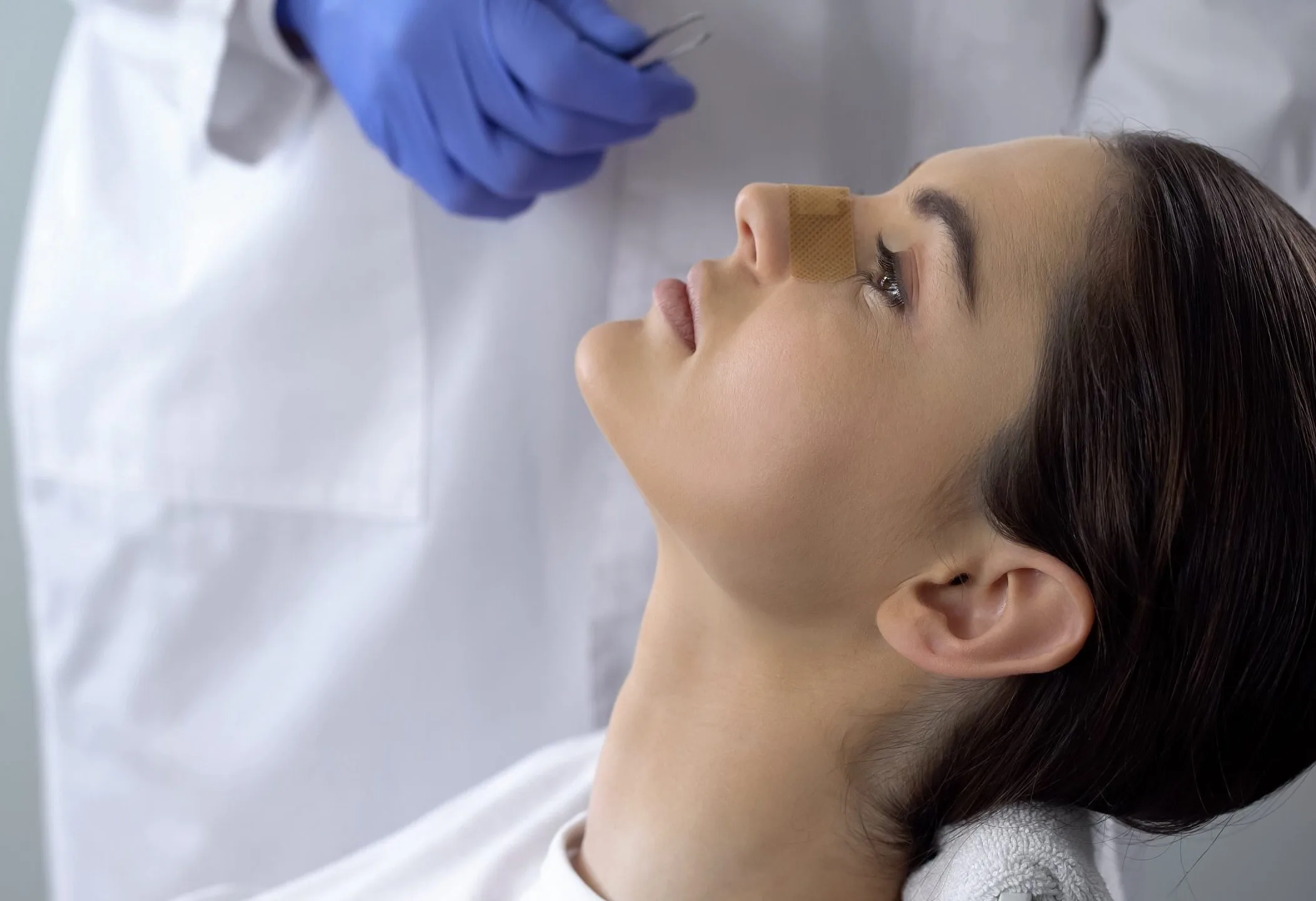
The first 48 hours bring the most dramatic swelling. You’ll leave the office with a nasal cast or splint in place, and you may have packing inside your nostrils. The area around your nose and eyes will begin to puff up within hours – swelling is not limited to the nose itself. It’s common to see puffiness around the eyes, cheeks, and even the upper lip. Some patients also experience bruising beneath the eyes. Your nose will feel congested and look significantly larger than you expected, which is entirely normal. Cold compresses applied to the cheeks (not directly on the nose) can help during this stage.
During days one through three, swelling reaches its maximum. Bruising may spread slightly and darken before it begins to fade. Your upper lip may feel stiff, and smiling might be uncomfortable. This is the most crucial time for rest and following at-home care instructions, such as keeping your head elevated on two or three pillows to help fluid drain away from the surgical area. Most patients find that by the end of day three, the worst of the puffiness has stabilized.
Around days five to seven, the nasal splint is typically removed during your follow-up visit at our Spring office. External stitches are also removed at this time. Many patients are surprised by how much better the nose already looks once the splint comes off – though it may also appear more swollen than expected right after removal, because the splint was compressing the tissues. By the end of week one, roughly 50 percent of visible swelling has resolved. Bruising is usually fading to a yellowish hue and can be covered with makeup.
During weeks two and three, you’ll notice daily improvements. The bridge of the nose starts to look more defined, and under-eye puffiness continues to diminish. Most patients feel comfortable returning to work and social activities by the end of week two, though some residual puffiness remains visible mainly to you. Other people are unlikely to notice. The nose may feel firm or slightly numb during this phase, which is a normal part of tissue healing. Restrictions on strenuous exercise still apply.
By week four, around 60–70 percent of the total swelling has resolved, and your nasal profile will be much more defined. The upper two-thirds of the nose (the bridge and middle vault) typically look close to their final form by this point. The tip, however, still carries residual puffiness. You may notice that swelling fluctuates slightly – appearing a bit more swollen in the morning after lying flat all night, then improving throughout the day.
From the third to the sixth month, the changes become more subtle but meaningful. The nasal tip gradually softens and narrows as skin begins to contract around the new cartilage framework. The definition improves week by week. Procedures focused specifically on the tip, like a tip rhinoplasty, require the most patience during this phase. Patients who had revision rhinoplasty or more extensive tip work may notice that this phase takes slightly longer. For most people, about 80 to 90 percent of swelling has resolved by the six-month mark.
This phase tests your patience. The remaining 10 to 20 percent of swelling is concentrated almost entirely at the nasal tip. Changes are gradual – often so slow that they’re hard to see day-to-day. However, comparing a photo from month six to month twelve reveals noticeable tip refinement. The skin thins out, definition sharpens, and the delicate contours and structure created during surgery are fully revealed.
For most patients, the final result is fully visible between 12 and 18 months after surgery. Patients with thicker skin may need up to 2 years to see the full outcome, and minor swelling can persist longer in revision cases. At this point, the nose should look and feel natural. This is the appropriate time to evaluate whether any touch-up work may be needed – though the vast majority of patients are satisfied with their results well before this milestone.
Normal post-operative swelling is generalized and decreases over time. Certain patterns should prompt you to reach out:
Sudden, significant increase in swelling or pain after a period of steady improvement
Swelling that is significantly worse on one side compared to the other
Redness, warmth, or tenderness that intensifies rather than fades
Fever or chills
Persistent or unexpected drainage or bleeding from the nose that appears unusual in color or odor
If anything about your recovery feels off, don’t wait for your next scheduled appointment. Contact Cilento Facial Plastics. It’s always better to ask a question and get reassurance than to ignore a potential concern.
Following your post-operative instructions is the single most important thing you can do to manage swelling and ensure a smooth recovery.
Keep your head elevated, especially during sleep, for at least two to three weeks after surgery. Use two or three pillows to let gravity help drain fluid away from your face.
Apply cold compresses to your cheeks and around your eyes (not directly on the nose) for the first 48 hours to help reduce swelling and bruising.
Stay hydrated – drinking plenty of water supports circulation and helps your body flush excess fluid.
Eat a low-sodium diet in the weeks following surgery, since salt promotes water retention and can worsen puffiness. Focus on nutritious, whole foods.
Walk gently starting a few days after surgery. Light movement encourages blood flow without raising your heart rate too much.
Strenuous exercise for at least four to six weeks – elevated heart rate and blood pressure can increase swelling.
Bending forward or lifting heavy objects during the first two weeks.
Blowing your nose for at least two weeks after surgery. If you need to sneeze, do so with your mouth open.
Wearing glasses that rest on the bridge of your nose for six to eight weeks. Pressure can affect the healing of bones and cartilage. Use tape or alternative supports as directed.
Sun exposure on the healing nose – UV light can worsen swelling and cause permanent discoloration of any bruising.
Rhinoplasty recovery is a gradual process, and understanding the swelling timeline can help you approach each stage with confidence and realistic expectations. While noticeable improvements occur within the first few weeks, the final refinements – especially at the nasal tip – take time to emerge. By following your surgeon’s aftercare instructions, maintaining patience throughout the healing process, and attending all follow-up appointments, you can support optimal results and enjoy the full benefits of your rhinoplasty journey.

About the Author
Dr. Ben cilento