
Revision rhinoplasty is needed when a previous nose surgery leaves a cosmetic concern, a breathing problem, or a structural change that does not improve with time. The most common reasons include an unbalanced or asymmetrical appearance, trouble breathing through the nose, a result that removed too much or too little tissue, or injury to the nose after the first surgery. Timing matters, as most patients need to wait until the nose has fully healed before planning a second surgery. Patients researching, usually want to know whether their concern can be corrected and when to act. This article covers both.
Revision rhinoplasty is a second surgery on the nose, performed after an earlier rhinoplasty. It is sometimes called secondary rhinoplasty. A first-time surgery is known as primary rhinoplasty.
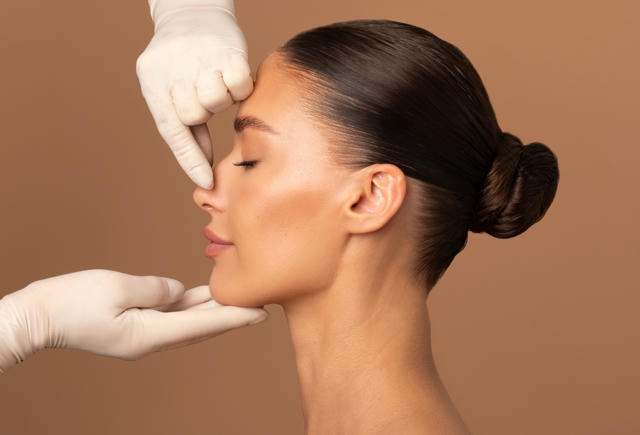
At Cilento Facial Plastics, we view revision rhinoplasty as having two goals. The first is restoring proper nasal function so air moves freely through the nose. The second is correcting one or more aspects of the nose’s appearance that did not turn out as the patient hoped. Many patients come to us with both concerns at once.
Revision work is often more involved than a primary surgery. The nose has already been changed once. Scar tissue, altered cartilage, and thinner support structures all shape what is possible. Because of this, Dr. Cilento, our plastic surgeon, studies how the nose was changed before and plans the revision around the tissue that remains.
Every patient’s reason is personal, but most fall into a few clear groups. Understanding these groups helps patients put words to what is bothering them.
Some patients finish healing and still feel their nose does not match their face. The concern might be a bump on the bridge that is still visible. It might be a tip that looks too round, too pinched, or uneven. Others notice that the nostrils are different sizes or that the nose leans to one side.
Facial harmony also plays a role. A nose that looks fine on its own may still feel out of proportion with the chin, cheeks, or forehead. For patients of diverse backgrounds, a common concern is a result that erased features tied to their heritage. Our office performs ethnic rhinoplasty for African American, Hispanic, Middle Eastern, Asian, Persian, and Mestizo patients. That focus shapes how we approach revisions for patients who want a nose that still looks like their own.
A nose can look the way a patient wanted and still not work well. Some patients notice they breathe less easily after their first rhinoplasty than they did before it. Others had breathing problems that were never addressed during the first surgery.
Common signs include:
Feeling blocked on one or both sides of the nose
Nostrils that pinch inward when breathing in
Trouble breathing during exercise or sleep
Relying on mouth breathing during the day
These issues may stem from a deviated septum, narrowed nasal passages, or weakened support in the sides of the nose. Our office also performs septoplasty, which straightens the wall between the nostrils. Breathing concerns are a medical reason for revision, not only a cosmetic one, and they deserve a careful evaluation.
Overcorrection means too much was changed. Too much cartilage or bone was removed, and the nose looks scooped, pinched, or too small for the face. A bridge that dips too low or a tip that turns up too far are common examples. Overcorrection can also weaken the nose’s structure, which may affect breathing.
Undercorrection means too little was changed. The patient may still see the hump, the wide tip, or the crookedness that led them to surgery in the first place. Undercorrection is often easier to address than overcorrection, because there is more tissue to work with.
In overcorrected cases, the revision usually focuses on rebuilding support and restoring shape. In undercorrected cases, the focus is on finishing the refinement the patient wanted from the start.
A nose that has been through surgery can still be injured later. A fall, a sports accident, or a blow to the face can shift bone or cartilage out of place. This can happen months or years after a successful first surgery.
An injury may change the nose’s shape, cause new asymmetry, or block the airway. Some patients notice the change right away. Others see it slowly as swelling from the injury fades. If your nose was injured after rhinoplasty, a professional evaluation can show whether the change is temporary or structural.
Not every revision traces back to how the first surgery was performed. Healing is a big part of the final result, and each body heals in its own way. In some cases, the way the tissues settle over many months leads to a shape or function the patient did not expect.
Several factors can affect how a nose heals after surgery:
Skin thickness. Thicker nasal skin tends to hold swelling longer and may hide fine details in the tip. Thin skin can show small irregularities more easily.
Scar tissue. Some patients form more scar tissue than others. Extra scar tissue can blur the nose’s shape or tighten areas inside the nose.
Aftercare habits. Not following aftercare instructions, wearing glasses too soon, or bumping the nose during recovery can affect the result.
Smoking and nicotine. Nicotine limits blood flow, and good blood flow is important for healthy tissue repair.
Overall health. Certain health conditions and medications can slow healing.
Some of these factors are within a patient’s control. Others, such as skin type and scar tendency, are not. Knowing which ones apply to you helps shape realistic goals for a revision.
When healing does not go as planned, the changes often show up slowly. A tip may stay full long after the rest of the nose has settled. Cartilage grafts can shift slightly as scar tissue forms around them. A small irregularity on the bridge may become visible once swelling fades.
Inside the nose, scar tissue can narrow the airway and make breathing harder. Patients sometimes notice this months after surgery, once early swelling is gone and they expected to feel better.
A revision in these cases aims to address the specific change caused by healing. That might mean softening scar tissue, adjusting a graft, or adding support where the structure has weakened. Our team looks at how a patient healed the first time and plans with that pattern in mind.
A revision is worth considering when a concern is lasting, noticeable, and tied to how the nose looks or works. Patients asking “Reasons for Revision Rhinoplasty: When Is It Needed?” often fall into one of these groups:
Their nose has fully healed, and a cosmetic concern is still clearly present.
They have ongoing trouble breathing that began or got worse after surgery.
Their nose looks overcorrected, undercorrected, or uneven.
An injury after the first surgery changed the shape or blocked the airway.
Healing produced a shape or function that does not match the surgical plan.
Small concerns that only the patient notices may not call for another surgery. Minor asymmetry is normal in every face. Part of a revision evaluation is an honest conversation about whether surgery will create a meaningful improvement. Some patients learn that their concern is likely to improve as swelling fades. Others learn that a revision is the right path forward.
A thorough evaluation looks at the outside of the nose, the inside of the nose, and how the patient breathes. Dr. Cilento reviews what was changed in the first surgery, what the patient wants to correct, and what the remaining tissue can support. You can learn more about his background on our Dr. Cilento page.
Patience is one of the most important parts of revision planning. After rhinoplasty, swelling goes down in stages. Much of it fades in the first few weeks, but the final shape can take a year or longer to appear. Swelling in the tip is often the last to resolve, especially for patients with thicker skin.
Most surgeons recommend waiting about a year after the first surgery before a revision. Some patients need to wait longer, depending on how their tissues are healing. Waiting allows:
Swelling to resolve so the true result is visible
Scar tissue to soften and mature
The surgeon to see which concerns are permanent and which are temporary
Operating too early can make it hard to judge what needs to change. It can also mean working through tissue that is still healing.
There are exceptions. A severe injury or a major breathing obstruction may need attention sooner. In those cases, timing depends on the specific problem and how the nose is healing.
If you are within the first year after rhinoplasty and feel unsure about your result, an early evaluation can still help. It gives you a clear sense of what to expect as healing continues and whether a revision may be needed later.
The answer to “Reasons for Revision Rhinoplasty: When Is It Needed?” comes down to lasting concerns with appearance, breathing, structure, or healing after a prior nose surgery. Most patients should wait until healing is complete before moving forward. To learn more about how our team approaches second surgeries, visit our revision rhinoplasty page.